
Thickness is often the first feature buyers compare, but it cannot explain how long a rubber mat will perform. Commercial rubber mat durability comes from the interaction of compound, construction, operating conditions and care. This guide explains what to evaluate, how to interpret changes in condition and when a product needs review rather than another assumption about lifespan.
What Durability Means in a Working Environment
A durable rubber mat remains suitable for its intended work as it is used. That involves more than retaining an attractive surface: structural condition, edges, shape and the ability to perform the intended function all matter. A mat can still look substantial while damage at one edge makes its placement problematic.
Thickness, weight and hardness describe aspects of a product, not a complete durability result. Likewise, “heavy duty” is a description rather than a defined service-life rating. Compare the construction with the conditions it must withstand and the information published for that product.
The useful starting point is the mat’s purpose. If it was selected for a connected floor area, inspect the connections as well as the surface. If it serves a standing position, changes in shape or movement may matter even before the entire surface looks worn. These are practical review considerations, not universal acceptance limits.
Why There Is No Universal Rubber Mat Lifespan
How long do rubber mats last? There is no reliable single number of months or years for all commercial products. Two visually similar mats can experience very different contact, exposure and maintenance. A lightly used entrance differs from a continuously used workstation, while a wet area or oil-exposed position introduces further considerations.
Equipment contact may concentrate loading in a small area; outdoor placement may add sunlight, weather and temperature changes. None of these examples supplies a lifespan estimate. They explain why a service-life claim without a product, application and set of conditions gives buyers little basis for comparison.
Build a useful expectation by identifying the product and its supported use, recording the actual environment, then observing condition against that starting point. Keep notes on installation, traffic, fluids and cleaning changes. Ask the supplier what information supports any durability claim and what conditions it covers.
For replacement planning, your own history can be useful when the product and conditions are genuinely comparable. Record why a mat was removed, not merely its age. Localised damage, changed equipment and general wear suggest different purchasing questions; one replacement date should not become a promise for every future installation.
Compound Compatibility and Exposure
The rubber compound must suit the substances and environment it encounters. Oils, grease, water, cleaning agents and other workplace fluids create different exposure questions. The identity of a fluid, how frequently it contacts the mat and whether it remains beneath the surface all help define the requirement.
Incompatible exposure can contribute to swelling, softening, hardening, cracking or deformation, depending on the material and conditions. These observations do not prove a particular chemical cause. Mechanical stress, ageing or other operating factors may also be involved, so review the exposure history and product specification together.
Outdoor suitability also needs to be stated for the product rather than inferred from its colour or appearance. If the cleaning agent, process fluid or placement changes, reconsider whether the original material choice still fits. A compound designation or NBR percentage alone is not a service-life rating.
Thickness, Surface and Complete Construction
Rubber mat thickness can influence cushioning, mass and the amount of material in a particular construction. It is not a durability rating. Two mats of equal thickness can have different compounds, surface profiles, underside designs and intended uses, so equal dimensions do not establish equal performance.
A thicker mat may introduce a higher transition or more demanding handling without resolving the actual cause of deterioration. A heavier mat is not automatically better either: weight can reflect dimensions and construction rather than suitability for the job. Hardness likewise should not be treated as a substitute for the complete specification.
Look at the surface and underside together with edge geometry and the way the mat is supported. Raised features, openings and connections have different roles and may experience wear in different places. Compare the specified product under the intended loading and exposure, rather than choosing the largest number on a dimension list.
Traffic, Loading and Concentrated Wear
Traffic means more than counting footsteps. Repeated turning at a workstation, carts crossing an edge where supported, equipment contact and objects dragged across a surface can impose different demands. Describe the type of movement as well as how often it occurs.
Localised wear can develop where activity repeatedly concentrates on one position. For example, an otherwise lightly used area may have a heavily used turning point or a narrow crossing route. Review that location instead of assuming wear should be uniform across the mat.
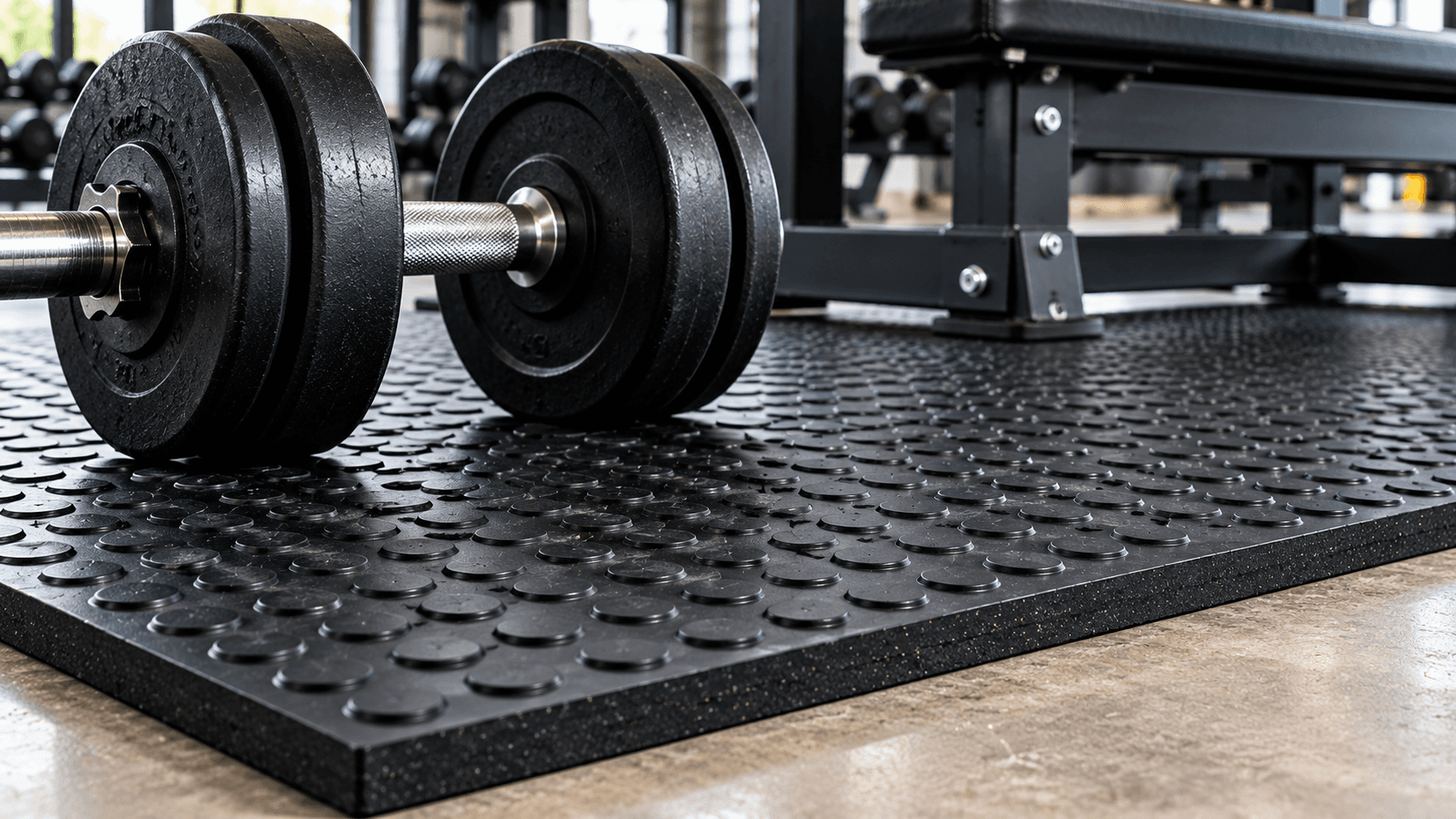
Use published application information to decide whether equipment or wheeled traffic is supported. A product photograph, including this article’s editorial illustration, is not evidence of load capacity or durability testing. If equipment changes, identify its contact arrangement and operating requirements before assuming the existing mat remains suitable.
Installation, Edges and Floor Condition
A mat needs placement appropriate to its design and the underlying floor. Review whether the substrate provides suitable support, whether the mat fits the intended area and whether adjoining sections connect as specified. An uneven or unsuitable floor is not corrected simply by covering it with more rubber.
Movement, raised edges, gaps and poor transitions can affect serviceability and expose parts of the mat to repeated contact. Debris underneath may change support or contribute to localised wear. Check the condition of the floor and underside as well as the visible top surface.
Follow the product’s fitting guidance rather than assuming all mats require the same installation. Avoid treating improvised overlaps or unapproved alterations as a remedy for poor fit. Placement is one factor in durability alongside material, construction and use; a well-fitted mat still needs to suit its exposure.
Cleaning and Inspection That Support Continued Use
Appropriate cleaning helps remove accumulated dirt and debris and makes changes in condition easier to see. Use methods compatible with the product and the substances present. An aggressive cleaner or unfamiliar cleaning process should be checked before use, rather than assumed suitable for all rubber.
Include the underside and surrounding floor where the product’s handling and installation allow access. Follow applicable care guidance for rinsing, drying and returning the mat to position. Cleaning should not leave debris or residual liquid hidden beneath the mat.
Inspection frequency should reflect use and workplace procedures; there is no universal schedule for every commercial mat. Check surface wear, edges, connections, shape and unusual changes, including after a spill or change in equipment. Keeping a brief condition record helps separate gradual wear from a new problem.
Maintenance cannot reverse every form of damage or guarantee a particular increase in lifespan. Its practical value is keeping the product appropriately maintained and identifying deterioration early enough to review continued use.
Signs a Rubber Mat Needs Review or Replacement
Look for changes that affect the intended function or create operational concerns. The following condition checks suggest what to investigate; they are not definitive diagnoses.
Cracking, tearing or excessive surface wear
Possible contributors include repeated stress, ageing, exposure or other conditions. Check where the damage occurs, the application and any change in use or cleaning. A crack does not by itself prove that the compound or manufacturing process was wrong.
Swelling, unusual softening or hardening
These changes may be associated with fluid exposure or compatibility issues, among other causes. Identify the actual fluids and cleaners, contact duration and published material information. Note whether the change is localised or widespread before requesting a product review.
Damaged edges or persistent curling
Traffic, movement, dragging, fit and concentrated contact may contribute. Examine crossing routes, placement and the underlying floor. Persistent lifting or loss of shape warrants review even if much of the mat still appears intact.
Permanent deformation or loss of function
Loading, environmental conditions and product construction may be relevant. Compare actual conditions with the supported specification. If damage or instability makes continued use questionable, follow workplace procedures for taking the mat out of use and seek supplier guidance before reuse or replacement.
Comparing Durability Claims and Product Specifications
Compare commercial rubber mats against the same intended conditions. Descriptions such as “premium”, “industrial grade” and “long lasting” should not replace published dimensions, construction, supported applications and documented properties. Rubber mat wear resistance should not be assumed from a marketing label.
- Confirm the environment, traffic and loading the mat will actually experience.
- Identify fluids, contaminants and the cleaning method, including any recent changes.
- Compare published compound information, dimensions, thickness, surface, underside and edge format.
- Check the stated application, installation arrangement and relevant resistance properties.
- Ask what documentation supports a required performance claim and what conditions or limitations apply.
- Agree what changes in condition should prompt review, using the intended function and supplier guidance.
Use the comparison to improve the next decision
Manufacturing consistency helps make specifications meaningful, while application suitability determines whether the product belongs in the location at all. Use those supporting guides when the main question shifts from condition and wear to production or selection.
For replacement-cost comparisons, consider the purchase alongside fitting, cleaning access and disruption when replacement is needed. Do not calculate guaranteed savings from an assumed lifespan. If an existing mat deteriorated, provide its specification, operating history and observations when requesting a review so the next choice addresses the relevant conditions.
Frequently Asked Questions
How long do rubber mats last?
There is no universal lifespan. Compare the product’s supported use with actual exposure, loading and care, then monitor condition. A useful service-life expectation needs comparable product and operating information.
Are thicker rubber mats more durable?
Not automatically. Thickness is one construction detail, not a durability rating. Compound, geometry, support and use can make two equally thick mats behave differently.
Does a heavier rubber mat mean better quality?
No. Weight can reflect size and construction without demonstrating suitability. Compare the complete specification and intended function rather than treating mass as a performance result.
What causes rubber mats to crack?
Cracking can have several contributing factors, including mechanical stress, ageing and exposure. Review the location, product and operating history; appearance alone does not establish a definite cause.
Can oil or chemicals shorten rubber mat life?
Incompatible exposure can affect condition. Identify the actual substance and contact conditions, then check the product’s supported properties. Resistance to one fluid does not establish compatibility with every cleaner or chemical.
How do I know when a rubber mat should be replaced?
Review damage, persistent curling, deformation or wear that affects the intended function. If continued use is questionable, follow workplace procedures and supplier advice rather than relying on age alone.
Does cleaning affect rubber mat durability?
Cleaning methods need to be compatible with the product. Appropriate care removes contamination and supports inspection, but cannot guarantee a fixed lifespan or repair every form of deterioration.
What makes an industrial rubber mat durable?
Its compound and construction need to fit the actual exposure, traffic and placement. Supported specifications, appropriate installation and condition-based maintenance provide a better basis for evaluation than “heavy duty” wording.