
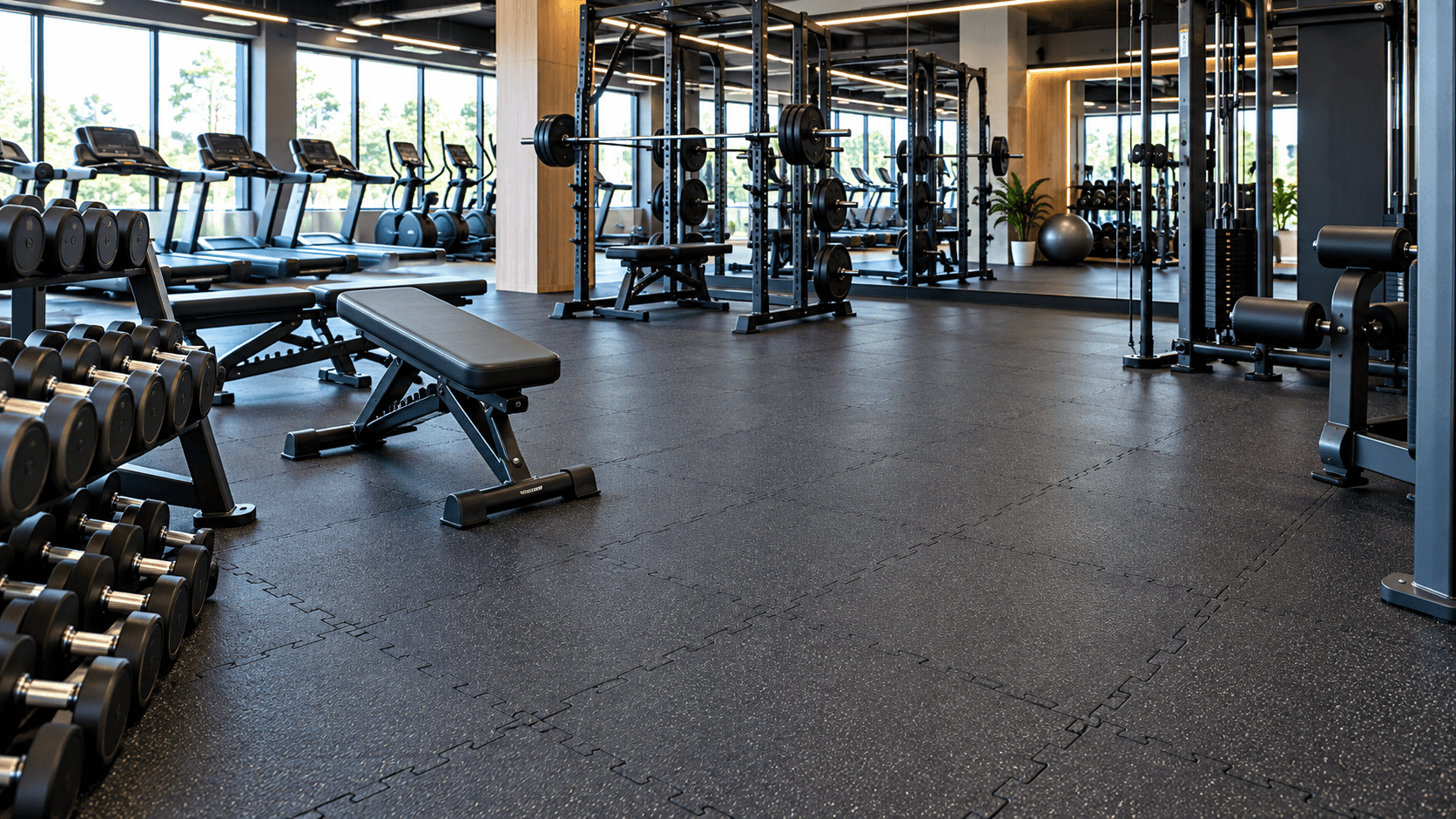
Rubber gym mats and flooring play an important role in creating a stable, durable and practical surface for fitness spaces. From commercial fitness centres and strength-training areas to home gyms and equipment zones, the flooring must cope with repeated foot traffic, exercise equipment, movement and impact while helping protect the underlying floor.
But not every gym requires the same flooring.
The right solution depends on the type of exercise, equipment, expected traffic, existing subfloor, required coverage, installation method and operating environment. Understanding these factors makes it easier to choose a rubber gym flooring system that matches the actual application.
What Are Rubber Gym Mats?
Rubber gym mats are resilient floor-covering products designed for fitness, exercise and equipment areas.
The term gym mat can describe several different products. Loose exercise mats used for stretching or yoga are different from rubber flooring systems designed to cover and protect a floor.
For larger fitness areas, rubber flooring is commonly supplied as:
- Interlocking rubber tiles
- Modular gym floor tiles
- Individual equipment-area tiles or mats
- Rubber flooring rolls
- Wall-to-wall rubber flooring systems
For commercial installations, the correct format depends on the required coverage, activity and floor layout.
Why Is Rubber Used for Gym Flooring?
Gym floors experience operating conditions that are very different from ordinary residential or commercial floors.
Fitness equipment can create concentrated loads. Free-weight and functional-training areas may experience repeated impact. Users need stable footing, while the original floor beneath the gym surface may require protection.
Rubber is widely used for gym flooring because the material can be engineered into durable, resilient surfaces with different textures, thicknesses and constructions.
Depending on the individual product design, rubber flooring can provide:
- Floor protection
- Grip and traction
- Cushioning
- Comfortable underfoot support
- Resistance to repeated use
- Modular floor coverage
- Easy replacement of individual tiles
- A professional and uniform appearance
Performance should always be assessed from the specification of the individual product rather than assuming that every rubber mat provides the same properties.
Key Features of Rubber Gym Mats
1. Floor Protection
One of the main functions of gym flooring is to create a protective layer between fitness equipment and the underlying floor.
Weights, benches, racks and exercise machines can place significant loads on a floor. A correctly selected rubber flooring system can help reduce direct contact and everyday wear on the surface below.
The required level of protection depends on the equipment, activity and construction of the flooring.
2. Grip and Surface Stability
Stable footing is important in fitness areas.
A textured rubber surface can provide useful traction during workouts and around equipment. The surface design should suit the intended activity and operating environment.
3. Cushioning and Comfort
Rubber has resilient characteristics that make it suitable for areas where people spend considerable time standing, walking and exercising.
The level of cushioning depends on factors including:
- Rubber compound
- Product density
- Thickness
- Surface design
- Backing construction
- Overall product structure
Thickness alone should not be treated as a complete measure of cushioning or performance.
4. Modular Installation
Interlocking rubber gym tiles allow a larger floor to be assembled from individual sections.
This can be particularly useful for:
- Wall-to-wall gym floors
- Defined training zones
- Equipment areas
- Renovation projects
- Areas where individual damaged tiles may need replacement
5. Durability
Commercial fitness spaces can receive frequent traffic and repeated loading.
The durability of a gym mat depends not simply on how thick it is, but on the relationship between rubber compound, construction, loading, surface design, installation and maintenance.
Advantages of Rubber Gym Flooring
Choosing an appropriate rubber gym floor can provide several practical advantages.
Protects the Existing Floor
Rubber flooring creates a barrier between gym activities and the original floor surface.
Provides a Stable Training Surface
A properly installed flooring system provides a consistent surface across exercise and equipment areas.
Suitable for Different Gym Layouts
Interlocking systems can be configured around room dimensions, equipment and defined activity areas.
Comfortable Underfoot
The resilient nature of rubber can provide a more forgiving surface than a hard, uncovered floor.
Replaceable Sections
With modular interlocking tiles, individual sections can often be replaced without removing the entire floor.
Professional Appearance
Consistent flooring can visually organise a fitness facility and create a finished, purpose-built environment.
Practical Maintenance
Many rubber flooring surfaces can be maintained through routine removal of dust and debris followed by cleaning appropriate to the product specification.
Where Are Rubber Gym Mats Used?
Rubber gym flooring can be considered for a wide range of fitness environments.
Commercial Gyms
Commercial fitness centres require flooring capable of supporting frequent use, exercise equipment and defined training areas.
Strength and Free-Weight Areas
Areas containing benches, racks, dumbbells and other strength equipment often require additional floor protection.
The required flooring specification should be based on actual equipment, loading and activity rather than simply selecting the thickest available tile.
Cardio Areas
Treadmills, exercise bikes, rowing machines and other cardio equipment can benefit from a stable protective flooring surface underneath.
Functional Training Areas
Functional training involves varied movements and therefore requires careful consideration of grip, floor coverage and the intended activities.
Home Gyms
Interlocking tiles can provide a convenient way to create a defined workout area in a home, garage or dedicated fitness room, subject to the product's supported environment.
Fitness Studios
Rubber flooring may also be considered for suitable studio and general fitness areas where durability, grip and easy floor coverage are priorities.
Equipment Zones
Rubber tiles can be used to create designated areas around fitness equipment without necessarily covering an entire facility.
Types of Rubber Gym Flooring
Understanding the available formats helps buyers choose the right flooring system.
Interlocking Rubber Gym Tiles
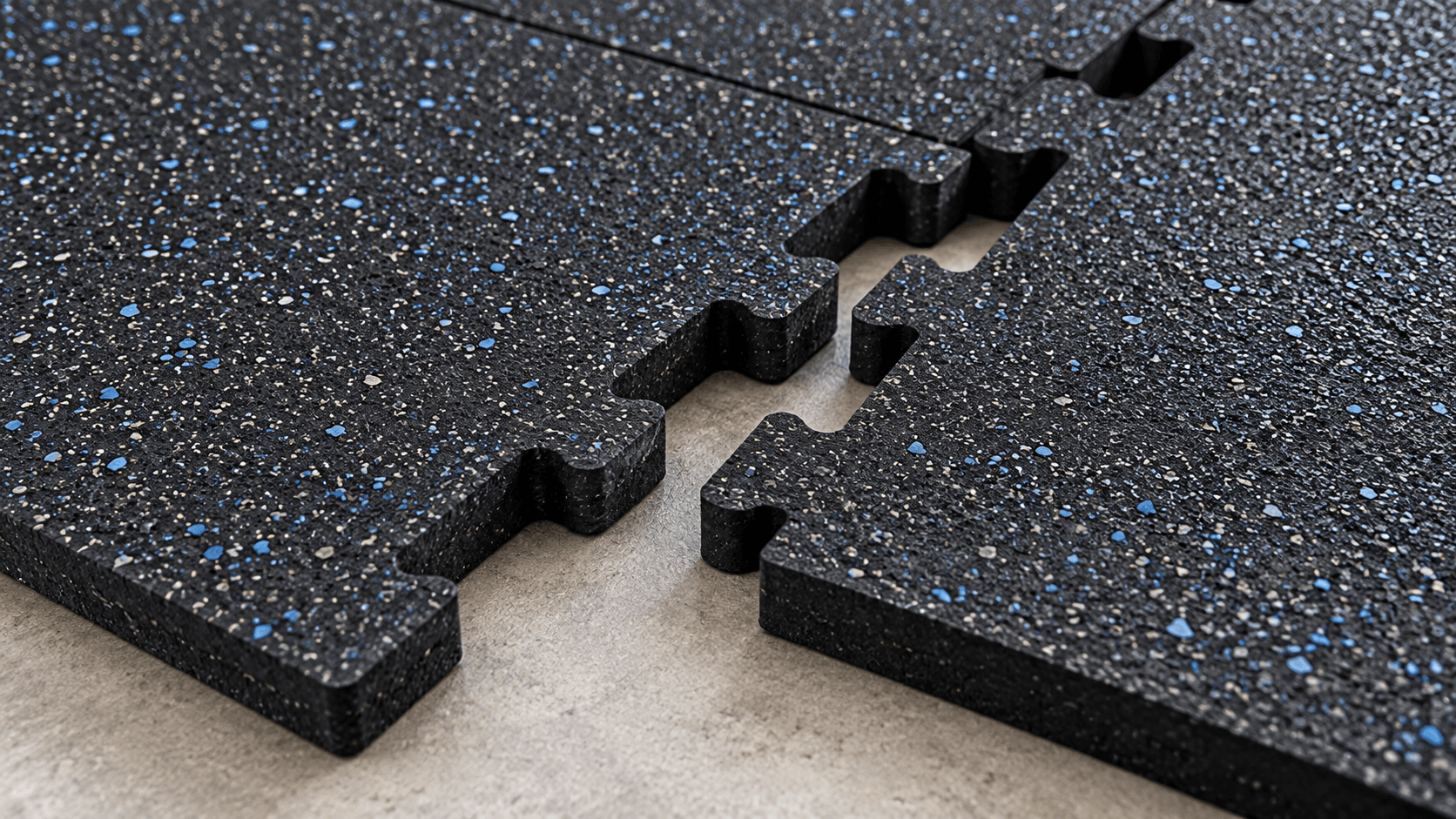
Interlocking tiles connect at their edges to form a larger continuous surface.
They are particularly useful when the requirement includes:
- Modular installation
- Larger floor coverage
- Defined training zones
- Wall-to-wall installations
- Easier replacement of individual sections
Highrange's gym flooring range focuses on interlocking rubber tile systems for professional fitness environments.
Rubber Flooring Rolls
Rubber rolls can provide continuous coverage with fewer joints across large areas.
Roll flooring and tile flooring have different installation requirements, so the preferred format should be selected according to the facility layout, available dimensions and installation method.
Equipment Mats
Individual mats may be placed beneath specific equipment where localised floor protection is required.
These should not automatically be treated as substitutes for a complete gym flooring system.
Wall-to-Wall Rubber Flooring
Connected tiles or other flooring formats can be used to create consistent coverage across an entire fitness area.
This approach is particularly useful when a uniform floor is required throughout the gym.
What Materials Are Used for Gym Mats?
The term rubber gym mat does not describe one universal material formulation.
A finished rubber compound may contain polymers, fillers, curing systems and other ingredients selected to achieve particular manufacturing and performance characteristics.
Depending on the product, gym flooring may use natural rubber, synthetic rubber, recycled rubber or formulated blends.
The important point for buyers is that material name alone does not determine product performance.
The finished flooring should instead be assessed according to:
- Intended application
- Rubber compound
- Product construction
- Density where specified
- Thickness
- Surface design
- Dimensions
- Installation method
- Indoor or outdoor suitability
- Manufacturer's stated performance characteristics
These are general gym flooring material categories, not a statement of the formulation or recycled content of Highrange’s three gym products. Confirm the rubber gym mat material from the specification for the selected product.
How Thick Should a Rubber Gym Mat Be?
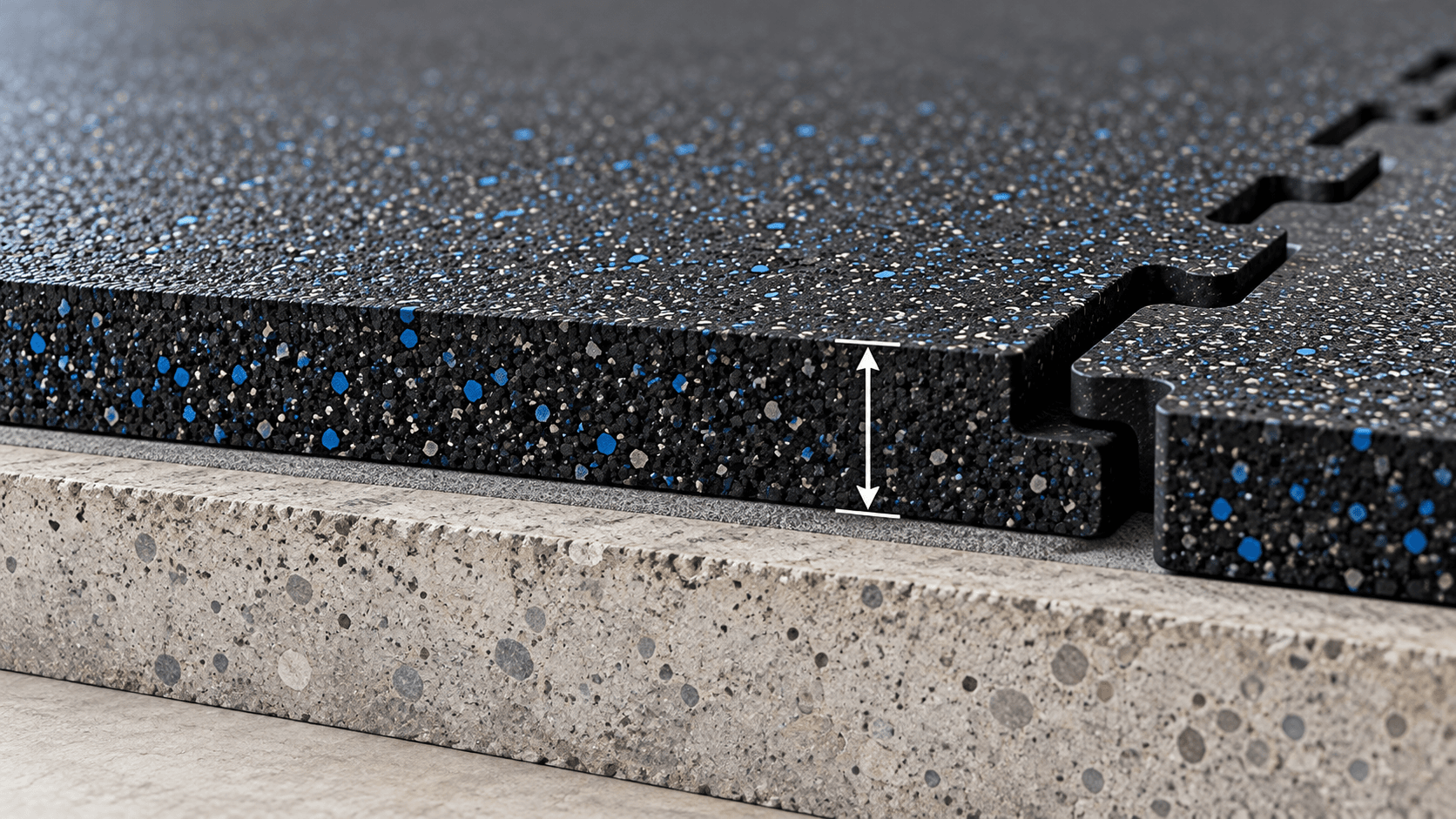
Thickness is an important specification, but thicker does not automatically mean better.
A fitness area containing relatively light equipment has different requirements from an area exposed to heavier equipment or repeated impact.
When deciding on thickness, consider:
- Type of exercise
- Equipment weight
- Expected impact
- Existing floor
- Required cushioning
- Product construction
- Density
- Indoor or outdoor location
- Transition height at doors and adjacent floors
For this reason, thickness should always be evaluated together with the construction and intended use of the particular product.
Gym Flooring Safety Considerations
Safety should be considered as part of the complete gym environment rather than attributed to the flooring alone.
Traction
The flooring surface should provide suitable grip for its intended use.
Secure Installation
Tiles should be fitted correctly so that the flooring remains stable during normal use.
Poor alignment, gaps or incorrectly fitted edges can affect the finished floor.
Floor Transitions
Where rubber flooring meets another surface, changes in floor height should be considered carefully.
Equipment Stability
Heavy equipment should be positioned according to equipment-manufacturer requirements and the flooring beneath it should be appropriate for the load.
Surface Condition
Worn, damaged or loose sections should be inspected and replaced where necessary.
Cleanliness
Dust, moisture and other contamination can affect floor conditions. A regular cleaning programme should therefore form part of gym-floor maintenance.
How to Choose the Right Rubber Gym Mat
Instead of beginning with colour or price, start with the conditions in which the flooring will operate.
Step 1: Define the Activity
What will happen in the area?
For example:
- Cardio exercise
- Strength training
- General fitness
- Functional training
- Equipment placement
- Wall-to-wall fitness use
Step 2: Identify the Equipment
List the major equipment that will stand or operate on the flooring.
Consider its weight, footprint and how it interacts with the floor.
Step 3: Measure the Area
Calculate the required coverage and note:
- Room dimensions
- Columns
- Doors
- Corners
- Equipment positions
- Floor transitions
Accurate dimensions help determine the number and size of tiles required.
Step 4: Examine the Existing Floor
Concrete, tile and other existing surfaces can create different installation considerations.
The floor should be assessed before the final flooring system is specified.
Step 5: Choose the Flooring Format
Decide whether the project requires:
- Individual mats
- Interlocking tiles
- Wall-to-wall tiles
- Roll flooring
- Defined equipment zones
Step 6: Compare Thickness and Construction
Do not compare products using thickness alone.
Consider material, density where available, surface texture, construction, dimensions and intended application together.
Step 7: Confirm the Environment
Check whether the product is designed for:
- Indoor use
- Outdoor use
- Indoor and outdoor use
A product designed for one environment should not automatically be assumed suitable for another.
Step 8: Consider Cleaning and Maintenance
Determine how the flooring will be cleaned and how easily individual sections can be accessed or replaced.
What Is the Best Rubber Gym Mat for Your Application?
Do not select a gym floor simply because a product is described as the thickest, heaviest or "best."
The best rubber gym mat for a particular application is the product whose construction and supported use match the conditions of that fitness space.
Selection should consider the activity, equipment, loading, existing subfloor, required floor protection, flooring construction, thickness, operating environment, installation and maintenance requirements.
A cardio area, a strength-training zone, a home gym and a commercial wall-to-wall fitness floor may therefore require different flooring decisions.
The eight-step selection process above provides a practical way to compare suitable options according to actual requirements rather than relying on a single specification.
When comparing gym mats for weights or gym mats for heavy equipment, describe whether weights remain on racks, machines apply sustained loads, or the activity includes drops. These are different requirements. Ask for a reviewed specification rather than inferring suitability from the terms “heavy duty” or “commercial”. For home gym rubber mats, also check door clearance, the existing floor and the product’s supported environment.
Rubber Gym Mats for Commercial Gyms and Fitness Centres
Commercial gyms and fitness centres often contain several activity zones within the same facility.
Strength areas may require flooring selected around equipment, loading and floor protection. Cardio zones need a stable surface beneath machines. Functional-training areas require careful consideration of intended movement, grip and coverage. Other areas may require consistent wall-to-wall flooring or modular equipment zones.
For commercial gym flooring, buyers should therefore evaluate the complete layout rather than assuming that one flooring characteristic determines suitability for every area.
Interlocking rubber gym tiles can be useful where modular installation, defined training areas or larger connected floor coverage are required, provided the selected product is specified for the intended application.
For commercial rubber gym flooring, map equipment footprints, circulation routes and transitions between training areas before ordering. Plan access for cleaning and replacement as well as the tile layout. Commercial gym mats and rubber gym floor mats should be compared against those requirements; a modular format alone does not establish suitability for every exercise or load.
Rubber Gym Mats Manufacturer, Supplier & Exporter in India
Highrange manufactures rubber matting in Changanacherry, Kerala, India and supplies commercial buyers and distributors, including international export enquiries. Its listed gym flooring range comprises interlocking rubber tiles. Buyers sourcing rubber gym mats in India can compare these products by supported application and specification before requesting a quotation.
For buyers sourcing rubber gym mats in India, product selection should begin with the actual application rather than a generic request for "gym mats."
A useful enquiry to a rubber gym mat manufacturer or supplier should identify, where relevant:
- Gym or fitness application
- Indoor or outdoor environment
- Existing floor
- Type of activity
- Equipment
- Required floor coverage
- Preferred tile or flooring format
- Quantity
- Destination
- Other relevant supported specification requirements
This information helps a manufacturer or supplier understand whether the requirement is for individual gym mats, interlocking rubber gym tiles, equipment zones or larger rubber gym flooring installations.
For commercial and export enquiries, buyers should compare products using supported specifications and intended application rather than assuming that all rubber gym mats provide identical performance.
For bulk rubber gym mats or wholesale gym mats, state the quantity as well as the total floor area: a supplier needs both to review the tile format and supply requirement. Distributors and fitness projects should identify whether the order serves one installation or several sites, and provide the dimensions and operating conditions for each area.
When discussing a requirement with a rubber gym flooring manufacturer or exporter, include the destination and any packaging, labelling, documentation or testing requirements. These details are reviewed before quotation; product suitability and commercial arrangements should be confirmed for the proposed order. A generic request for heavy duty gym mats does not establish an equipment-load or impact rating.
Use the gym flooring range to shortlist products, then share a specification brief with Highrange. This keeps manufacturer, supplier and export discussions tied to the actual fitness project rather than to a material name or thickness alone.
Highrange Rubber Gym Flooring Options
Highrange lists three interlocking rubber gym flooring options. Compare their stated environments, dimensions and applications, then confirm suitability for your equipment and floor layout. The dimensions below are the current listed product sizes, not performance or load ratings.
Secure Lock
Secure Lock is an anti-slip interlocking rubber tile for Gym and Industrial applications, with indoor and outdoor use listed. Its modular edges support connected floor coverage, and its stated features include interlocking installation and machinery floor protection.
The listed black tile sizes are 50 × 100 × 1.0 cm and 100 × 100 × 2.0 cm. Consider it for indoor or outdoor interlocking coverage, subject to review of the actual location and equipment.
Solid Safe Lock
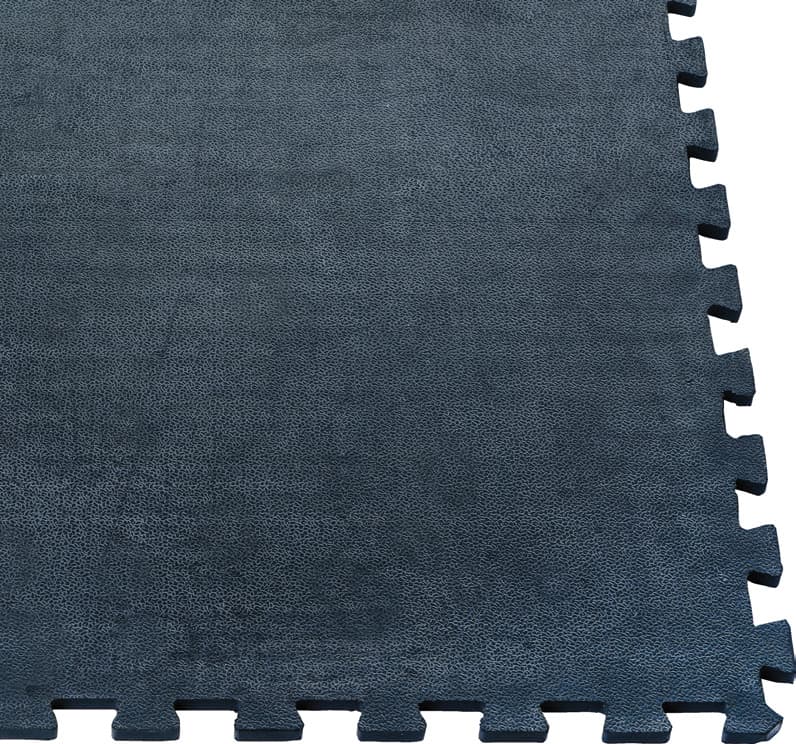
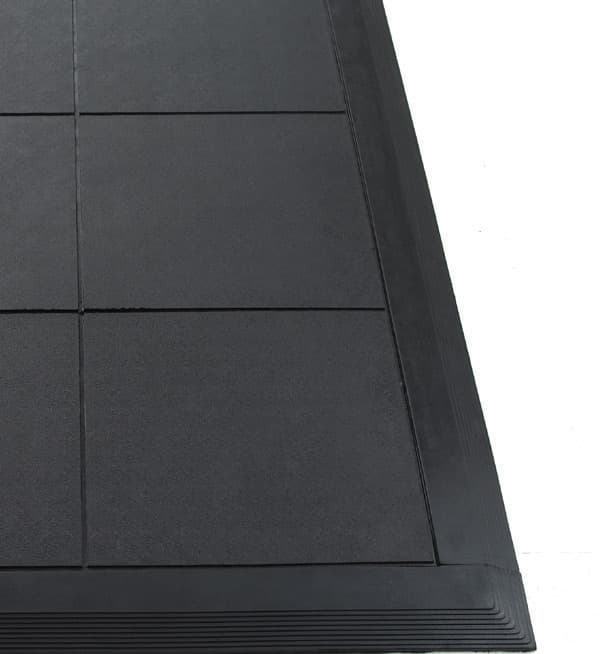
Solid Safe Lock is an indoor interlocking rubber gym tile for wall-to-wall fitness flooring. Its stated features include an anti-slip textured surface, wall-to-wall coverage and interlocking installation.
The listed black tile size is 91 × 91 × 1.6 cm. Its connected format supports consistent indoor floor coverage and modular fitting and replacement.
Shield Lock
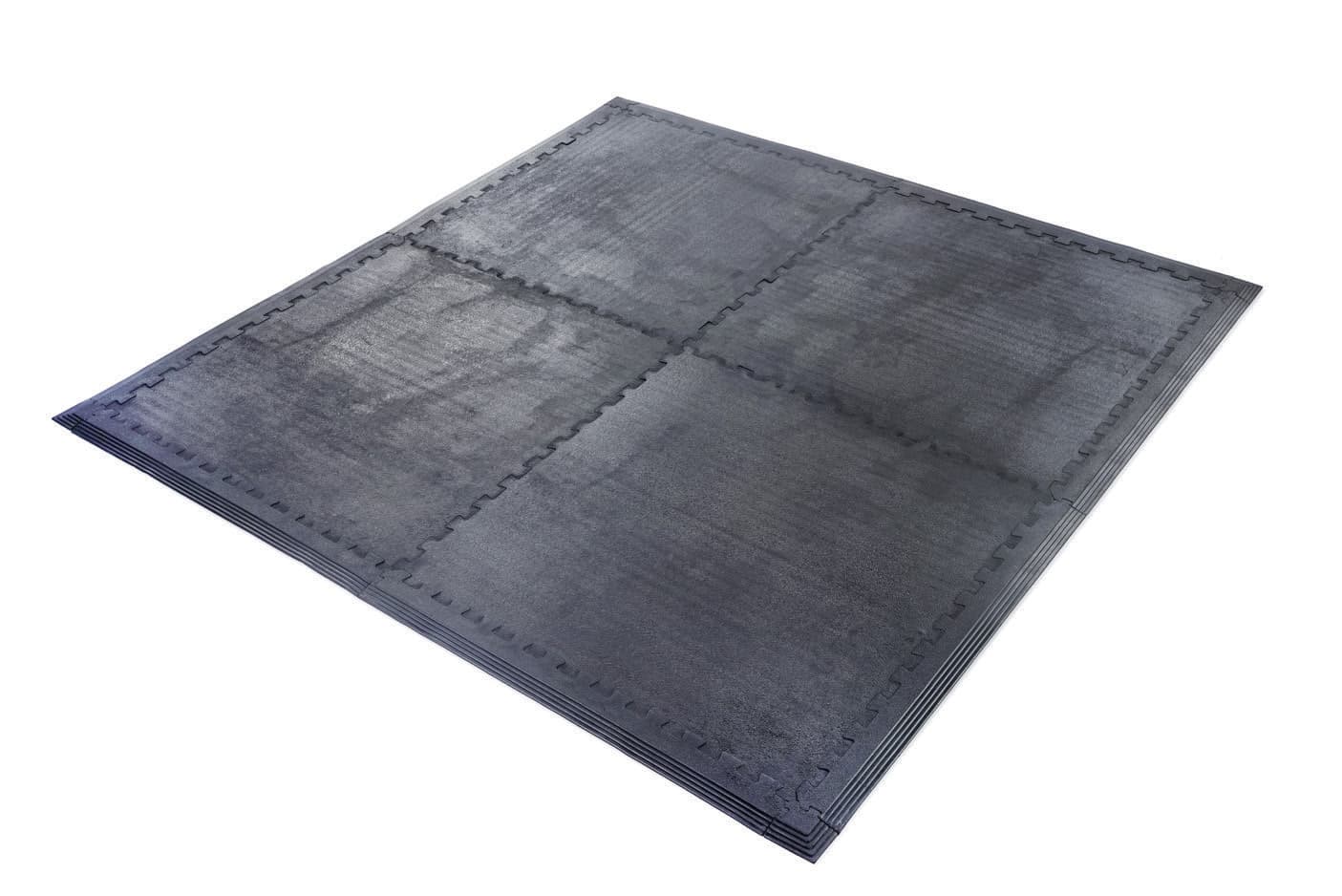
Shield Lock is an indoor interlocking gym tile with stated features of excellent grip, joint comfort and high tensile strength. Its product description identifies protection of the underlying floor around heavy fitness equipment.
The listed black tile size is 100 × 100 × 1.5 cm. Consider it for indoor equipment and activity zones after reviewing the equipment and subfloor. No weight-drop, acoustic, vibration or load rating is specified.
Installation Considerations
Correct installation helps a rubber gym floor perform as intended.
Before installation:
- Measure the area accurately.
- Inspect the existing floor.
- Ensure the surface is clean and suitable for installation.
- Plan the tile layout before fitting.
- Identify edges, doors and transitions.
- Follow the installation instructions for the selected flooring product.
Interlocking systems can simplify modular installation, but layout planning remains important, particularly for wall-to-wall projects and rooms containing fixed equipment.
Cleaning and Maintaining Rubber Gym Mats
Routine maintenance helps keep gym flooring clean and serviceable.
A practical maintenance programme may include:
- Removing loose dust and debris regularly
- Cleaning spills promptly
- Using cleaning products compatible with the rubber flooring
- Avoiding chemicals not recommended for the product
- Inspecting joints and edges
- Checking high-traffic areas periodically
- Replacing damaged modular sections when necessary
Always follow the cleaning and maintenance guidance supplied for the specific flooring product.
Rubber Gym Mats vs Ordinary Floor Coverings
A gym floor is exposed to conditions that many ordinary floor coverings were not designed to handle.
Fitness environments can involve concentrated equipment loads, repeated movement, footwear traffic and impact. A purpose-selected rubber flooring system allows these operating requirements to be considered as part of the floor specification.
The correct question is therefore not simply:
"Which gym mat looks best?"
A more useful question is:
"What flooring construction suits the activities, equipment, floor and environment in this fitness space?"
Choosing Gym Flooring by Application
A useful selection process is:
Activity → Equipment → Existing floor → Required protection → Coverage → Flooring format → Product specification
This approach helps buyers compare products according to actual operating requirements instead of relying on appearance, thickness or price alone.
Frequently Asked Questions About Rubber Gym Mats
Are rubber mats good for gym flooring?
Rubber is widely used for fitness flooring because suitable products can provide grip, resilient support and protection for the underlying floor. The correct product depends on the activity, equipment, environment and installation requirements.
What is the best rubber gym mat?
There is no single rubber gym mat that is best for every application. The appropriate choice depends on the type of activity, equipment, loading, existing floor, required protection, flooring construction, thickness, environment and installation requirements.
Are interlocking rubber tiles suitable for gyms?
Interlocking rubber tiles are particularly useful for modular gym flooring because individual tiles connect to create larger floor areas. They can be used for defined zones or, where supported by the product, wall-to-wall installations.
What thickness is best for gym mats?
There is no single thickness that is correct for every gym. Required thickness depends on equipment, activity, impact, product construction and the existing floor. Thickness should therefore be considered as one part of the complete flooring specification.
Can rubber gym mats be installed over concrete?
Many rubber flooring systems are installed over suitable concrete surfaces, but the condition and suitability of the existing floor should be checked before installation. Check surface level, condition, cleanliness and moisture requirements against the selected flooring system’s installation instructions. Do not assume tiles will correct an uneven or unsuitable subfloor.
Can rubber gym flooring be used outdoors?
Only products specifically designed or approved for the intended outdoor environment should be used outdoors. Do not assume that every rubber gym tile has the same environmental suitability. Highrange lists Secure Lock for indoor and outdoor use; Solid Safe Lock and Shield Lock are listed for indoor use. Confirm the conditions of the proposed location before ordering.
How do you clean rubber gym mats?
Routine cleaning may include removing loose dust and debris, cleaning spills promptly and using cleaning products compatible with the particular rubber flooring. Always follow the cleaning guidance for the selected product.
What is the difference between gym mats and rubber gym flooring?
A gym mat may refer to an individual exercise or equipment mat. Rubber gym flooring usually refers to a larger flooring system, such as interlocking tiles or rolls, designed to cover defined zones or complete fitness areas.
How do I choose rubber gym flooring for heavy equipment?
Begin with the equipment itself, including its weight, footprint and how it interacts with the floor. Then consider the existing subfloor, required floor protection, flooring construction, thickness and supported application. Do not select flooring for heavy equipment using thickness alone.
Where can I buy rubber gym mats in India?
When sourcing rubber gym mats in India, compare the intended application, flooring format, supported specifications, required coverage and installation environment. Highrange manufactures rubber matting in Kerala and accepts commercial, bulk and export enquiries. Explore its gym flooring range and submit the activity, equipment, existing floor, coverage, quantity and destination for a reviewed recommendation before quotation.
Build the Right Gym Flooring Specification
The most suitable rubber gym flooring is not necessarily the thickest or heaviest product available.
Good selection starts by understanding where the flooring will be installed, what activities will take place, what equipment it must accommodate, what floor lies beneath it and how much area needs to be covered.
For gym and fitness flooring requirements, useful enquiry information includes:
- Gym or fitness application
- Indoor or outdoor location
- Existing floor
- Activity type
- Equipment
- Floor dimensions
- Preferred tile format
- Quantity
- Destination
Share these operating conditions with Highrange for a reviewed gym flooring recommendation before quotation. Start with the range, compare the listed products and submit your project brief through the product enquiry form.